
At Factory For Good, we believe that generosity should create measurable change, not just goodwill. To ensure every dollar and every partnership truly moves the needle, we carefully vet the organizations we partner with through a transparent, evidence-based framework.
Our goal is simple: direct support where it can do the most good.
The Factory For Good Vetting Framework
We partner only with nonprofits that demonstrate transparency, accountability, and measurable impact. Every organization is evaluated through a tiered vetting system that helps families understand the level of verification and proof behind each partner’s results.
This structure ensures that our community can make informed decisions around giving, directing their resources to the organizations most capable of driving significant, lasting change.
The Factory For Good Tiers
Each tier reflects how deeply an organization’s outcomes have been verified and measured.
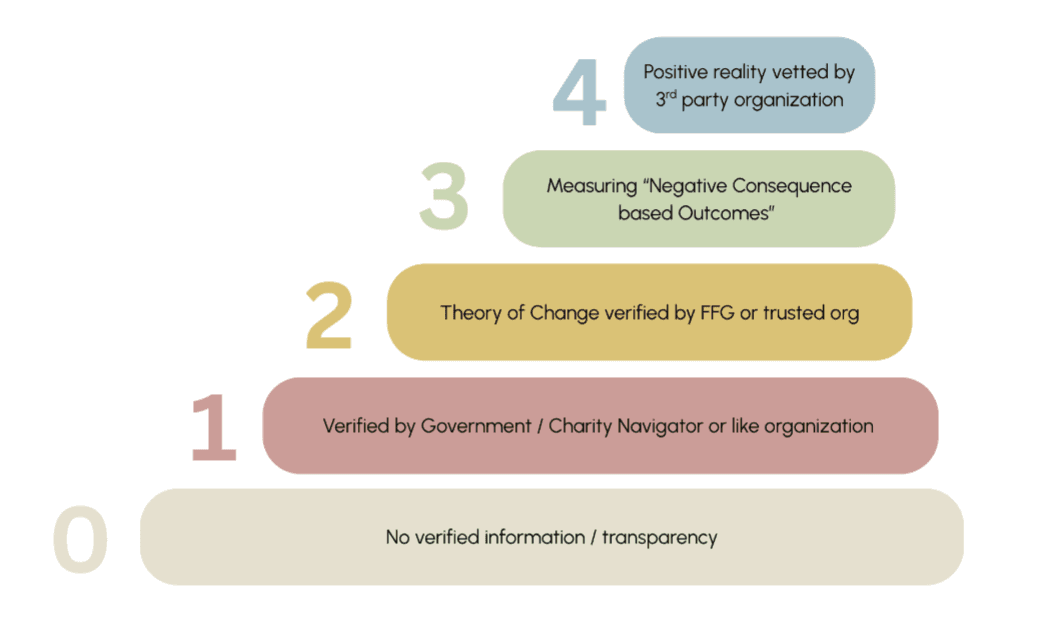
While specific categories may vary by cause area, the core progression looks like this:
Tier 1: Foundational Transparency
Organizations provide public financials, leadership information, and proof of compliance with regulatory requirements.
Tier 2: Operational Accountability
Nonprofits in this tier demonstrate internal evaluation processes, basic tracking of activities, and evidence of program reach (e.g., number of people served).
Tier 3: Evidence of Outcomes
These partners show measurable, sustained results—data that reflects real change in people’s lives, not just activity reports.
Tier 4: Independently Validated Impact
The highest level of vetting, where outcomes are externally verified by credible third-party evaluations, research studies, or longitudinal data.
This tiered approach creates a path of progress, encouraging all partners to continually strengthen their transparency, data quality, and long-term accountability.
Inputs, Outputs, and Outcomes: Knowing the Difference
A key part of how Factory For Good evaluates partners is understanding the distinction between inputs, outputs, and outcomes.
Each step is important, but they represent very different levels of impact.
- Inputs are the resources invested—like funding, materials, or volunteer hours.
- Outputs are the direct activities those inputs make possible, such as meals served, classes taught, or shelters built.
- Outcomes go one step further. They measure the change in people’s lives: reduced food insecurity, improved health, sustained employment, or long-term sobriety.
While many nonprofits report on outputs (“we served 10,000 meals”), Factory For Good helps families look deeper.
We ask: Did hunger actually decrease? Are people moving toward stability?
By prioritizing outcomes, we focus on transformation, not transaction.
Why Outcomes Matter Most
Outcomes reveal whether generosity truly changes lives.
They help us move beyond surface-level metrics to understand what’s working, what isn’t, and where resources should go next.
When families invest through Factory For Good, they’re not just supporting good intentions, they’re funding evidence-based interventions with measurable, lasting results.
That clarity builds trust, encourages repeat giving, and ensures that every act of generosity contributes to a broader, compounding wave of impact.
Negative Consequence-Based Outcomes: Reducing Suffering First
Within our focus on outcomes, Factory For Good places special emphasis on what we call negative consequence-based outcomes.
This simply means we measure progress by reducing or removing harm, not just creating enrichment.
For example:
- Instead of only tracking how many meals are served, we measure whether food insecurity actually declines.
- Instead of counting the number of addiction recovery classes, we look at whether sobriety is maintained six months later.
- Instead of tallying school supplies distributed, we assess whether literacy and attendance rates improve.
This approach ensures that impact is measured by how effectively hardship is reduced and how individuals move closer to stability and flourishing.
In other words, we don’t just celebrate activity, we measure the distance between suffering and thriving.
Why This Matters for Families
Philanthropy can often feel opaque. Families want to give, but they also want confidence that their generosity is making a genuine difference.
The Factory For Good vetting framework bridges that gap, bringing clarity, consistency, and accountability to the giving process.
By understanding the levels of verification and the true meaning of outcomes, families can give with both heart and confidence, knowing that their resources are being directed to organizations capable of creating significant, measurable change.
A Better Way to Measure Good
At Factory For Good, we’re not redefining generosity, we’re refining it.
Because when impact is measurable, transparent, and focused on reducing suffering, generosity becomes more than a feeling. It becomes a strategy for lasting change.
That’s how we ensure that every act of giving helps move someone from suffering to flourishing and builds a legacy that truly lives on.